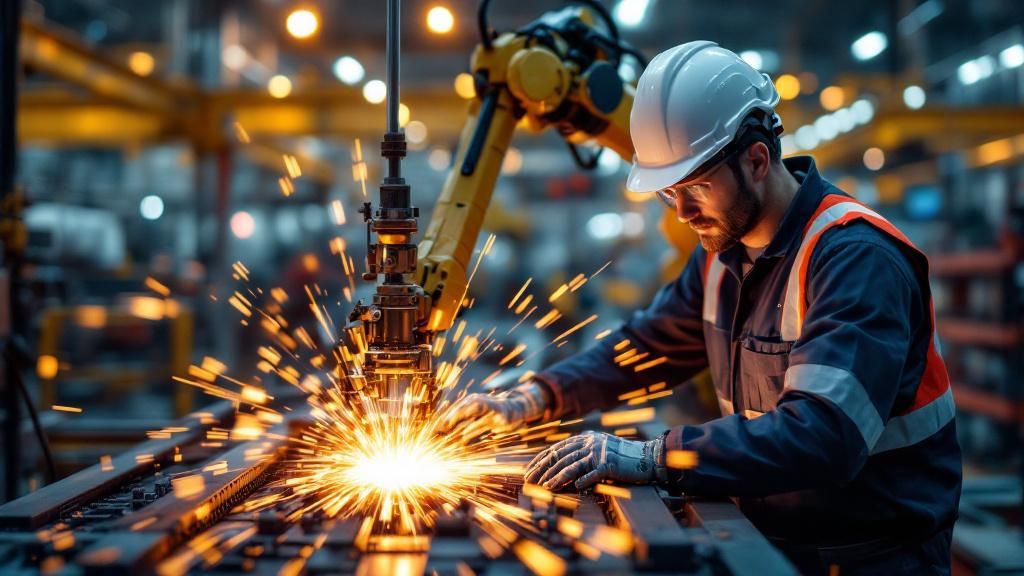

The UK manufacturing landscape is experiencing an unprecedented transformation as industry leaders commit substantial capital in cutting-edge automation technology and extensive skills training initiatives. This pivotal change demonstrates manufacturers’ resolve to enhance productivity, remain globally competitive, and safeguard long-term viability. Our research demonstrates the significant capital investments driving this sector overhaul, examines the cutting-edge solutions revolutionising factory floors, and investigates how businesses are readying their staff for tomorrow’s demands. Discover what this investment surge means for the UK manufacturing sector’s future.
Investment Surge in Automation Solutions
The UK production sector has witnessed an remarkable investment towards automation solutions, with capital attaining exceptional amounts in the past few years. Major manufacturers across the automotive, aerospace, and electronics industries are investing considerable resources towards robotic equipment, machine learning, and sophisticated manufacturing approaches. This capital boost reflects sector confidence in automation’s capacity to boost operational performance, reduce production costs, and improve product quality. The extent of this investment emphasises manufacturers’ recognition that technological advancement is crucial for sustaining competitive edge in an increasingly global marketplace.
Industry experts attribute this capital flow to various overlapping factors, encompassing post-pandemic distribution network evaluation, rising labour costs, and the urgent imperative for enhanced production flexibility. Companies are emphasising automation solutions that offer flexibility and scalability, allowing swift adjustment to variable consumer requirements. Investment data show that manufacturers are not merely replacing manual procedures but fundamentally reimagining operational frameworks. This deliberate strategy guarantees that British manufacturing continues at the vanguard of industrial innovation, positioning the sector for sustainable growth and improved durability against potential economic disruptions.
Strategic Human Capital Initiatives
Recognising that technological advancement alone cannot drive success, UK manufacturers are allocating considerable funds in comprehensive workforce development programmes. These initiatives represent a significant change in how the industry values and nurtures human capital. By coupling automation investments with rigorous upskilling initiatives, manufacturers are confirming their workforce can successfully run, service, and enhance new technologies. This holistic approach resolves competency deficiencies whilst building employee confidence and engagement in an progressively technology-driven environment.
Professional Development Programmes
Leading producers have established tailored learning institutions and apprenticeship programmes designed to equip workers with vital technical and digital capabilities. These schemes include robotic systems operation, data analytics, cybersecurity, and sophisticated coding languages. Funding for instructor-led and online learning platforms ensures availability throughout all workforce levels. Companies are partnering with learning organisations to deliver certifications recognised across the industry, enhancing career development potential and employee retention rates considerably.
The financial commitment to professional training surpasses first-stage induction, with manufacturers implementing ongoing capability enhancement initiatives. Workers benefit from consistent training options to keep pace with evolving technological landscapes and emerging industry standards. Many employers offer tuition reimbursement, mentoring schemes, and educational sabbaticals for additional study. This ongoing commitment reflects companies’ focus on developing sustained advancement opportunities and fostering a environment of continuous development throughout their organisations.
Working relationship with Academic Organisations
UK manufacturers are forging strategic partnerships with universities and higher education institutions to align curriculum development with sector needs. These partnerships ensure graduates possess practical skills immediately applicable to modern manufacturing environments. Joint ventures include curriculum design, visiting lectures, laboratory access, and resource supply. By working closely with educational institutions, manufacturers influence the pipeline of skilled workers joining the sector, tackling foreseen capability gaps in advance.
Additionally, manufacturers sponsor research projects and technology hubs within higher education institutions, encouraging knowledge sharing and technological progress. Combined-degree programmes and industrial placements equip students with invaluable real-world experience whilst offering companies priority access to new talent. These working relationships reinforce the UK’s status as a global manufacturing hub, maintaining ongoing competitiveness and establishing Britain as an appealing destination for advanced manufacturing investment and skilled labour development.
Financial Consequences and Prospects Ahead
The record funding for automation and employee development is forecast to generate significant economic benefits across the UK manufacturing sector. Market experts anticipate output increases of up to 25% over the next three years, resulting in higher production and improved competitiveness in global markets. These developments are expected to establish approximately 15,000 new skilled manufacturing positions whilst reinforcing Britain’s role as a technology-driven industrial hub. The multiplier effect of this investment will likely drive expansion throughout supply chains and supporting sectors.
Long-term forecasts for UK manufacturing appear growing more positive as businesses position themselves at the forefront of Industry 4.0 adoption. Companies committing to automation today are positioning themselves to unlock fresh commercial prospects and react quickly to evolving consumer demands. The incorporation of artificial intelligence, robotics, and cutting-edge analytics promises to unlock innovation potential previously constrained by labour availability and practical restrictions. Future-focused manufacturers recognise that lasting competitive advantage depends upon continuous technological advancement and employee skill enhancement.
Looking ahead, the momentum generated by present investment movements indicates a substantial transformation of British manufacturing’s economic contribution. Government support through skills funding and enterprise incentives will likely accelerate adoption rates across smaller businesses. As automation matures and worker capabilities increase, UK manufacturers are set to reclaim market share from overseas competitors. This shift constitutes not merely industrial modernisation but a strategic reorientation of manufacturing as a pillar of Britain’s future economic prosperity and technological advancement.
