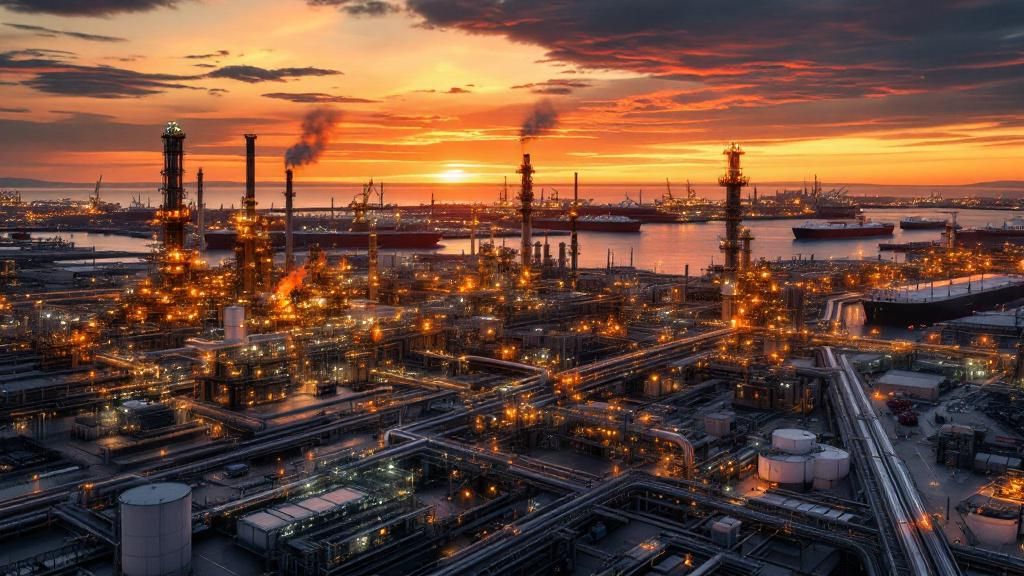

Oil prices have climbed nearly 7 per cent in the wake of US President Donald Trump’s declaration that America will ramp up its operations against Iran in the weeks ahead, whilst providing no defined plan for resolving the conflict. Brent crude climbed to $107.60 a barrel after Trump’s White House address, whilst West Texas Intermediate gained 6.4 per cent to approximately $106.50. The surge came as markets had momentarily expected Trump would detail an exit strategy, with crude falling below $100 ahead of his speech. Instead, Trump reiterated threats to strike Iran “back to the Stone Ages” over the next two to three weeks, leading Asian stock markets to reverse earlier gains and decline significantly. The escalation threatens continued disruption to global energy supplies already heavily strained by the conflict that began on 28 February.
Markets respond sharply to escalation rhetoric
Asian stock markets witnessed significant declines after Trump’s address, erasing the modest gains they had made earlier in the day. Japan’s Nikkei 225 declined 2.4 per cent, whilst South Korea’s Kospi fell more sharply by 4.5 per cent and Hong Kong’s Hang Seng fell 1.3 per cent. The region has shown itself highly exposed to the conflict’s economic consequences, owing to its strong dependence on Middle Eastern energy supplies. Analysts attributed the sharp reversals to Trump’s inability to offer reassurance about when disruptions to global oil shipments might subside, instead indicating a prolonged campaign ahead.
Market strategists have characterised Trump’s speech as a clear reality check that extinguished earlier optimism for an ceasefire in the near term. Alberto Bellorin from InterCapital Energy noted the absence of any concrete timeline for restoring operations through the Strait of Hormuz, with normal operations now looking months away rather than weeks. The longer timeframe for resolution has prompted investors to brace for prolonged supply constraints and persistent economic instability across Asia. Tina Soliman-Hunter from Macquarie University observed that Trump’s indication of a prolonged conflict has significantly reshaped market expectations regarding energy supply and price certainty.
- Nikkei 225 dropped 2.4 per cent following Trump’s inflammatory statements.
- South Korea’s Kospi experienced sharper decline of 4.5 per cent.
- Hong Kong’s Hang Seng fell 1.3 per cent in afternoon sessions.
- Asia’s susceptibility originates in dependence on Middle Eastern petroleum resources.
Strait of Hormuz remains vital flashpoint
The Strait of Hormuz, one of the world’s most vital energy corridors, has become the focal point of the intensifying Iran tensions. Oil shipments through this critical waterway have largely ground to a halt in the wake of Iran’s threats to attack tankers seeking transit in response to US-Israeli strikes. The interruption constitutes a significant damage to worldwide energy stability, with the strait typically handling a significant proportion of global oil commerce. Trump’s comments in his speech seemed to recognise the congestion, urging fellow countries to take matters into their own hands and obtain energy resources independently. However, his unclear appeal for countries to “go to the Strait and just take it” offered little concrete reassurance about how international commerce might restart.
The sustained closure of this sea route has generated unprecedented uncertainty for global energy internationally. Analysts caution that without a clear pathway to reopening the Strait, global oil supplies will continue restricted for months rather than weeks. Trump’s inability to specify concrete diplomatic and military objectives for addressing the standoff has left markets guessing about when normal shipping operations might resume. Energy traders are now factoring in extended supply disruptions, fuelling the sharp increases seen in crude oil prices. The international tensions centred on the Strait emphasise how the Iran conflict has transcended regional significance to establish itself as a crucial international matter.
Logistics interruptions escalate
The halting of oil shipments through the Strait of Hormuz constitutes an extraordinary disruption to worldwide energy flows. Iran’s direct warnings to target tankers transiting the waterway have deterred shipping companies from undertaking passage, effectively creating a blockade lacking formal declaration. This disruption comes amid already heightened tensions subsequent to the start of US-Israeli strikes on 28 February. The magnitude of the shipping crisis has compelled leading global shipping firms to reroute vessels through longer, costlier alternative passages. Energy analysts forecast that unless diplomatic channels open or military objectives are clarified, tanker traffic through the Strait will remain severely constrained.
The financial impact of this shipping disruption go far past oil prices alone. Global supply chains dependent on Middle Eastern energy have begun experiencing widespread supply disruptions. Countries significantly dependent on Gulf oil, particularly across Asia, face mounting pressure to find alternative supplies or accept significantly higher energy costs. Trump’s suggestion that nations individually obtain fuel from the region offers little practical solution, given the persistent security concerns. Without decisive measures to stabilize the waterway, energy markets will likely remain volatile, with crude prices reflecting the persistent uncertainty surrounding one of the world’s most crucial shipping lanes.
Asia’s energy security at risk
| Market | Change |
|---|---|
| Nikkei 225 (Japan) | Down 2.4% |
| Kospi (South Korea) | Down 4.5% |
| Hang Seng (Hong Kong) | Down 1.3% |
| Brent Crude | Up to $107.60 per barrel |
Asia’s susceptibility to Middle Eastern energy interruptions has been clearly demonstrated by Trump’s aggressive stance and lack of a coherent withdrawal strategy from the Iran conflict. Major stock indices across the region fell significantly following his White House remarks, with South Korea’s Kospi posting the largest fall at 4.5%. Japan’s Nikkei 225 declined 2.4% whilst Hong Kong’s Hang Seng fell 1.3%, indicating investor concerns about prolonged energy supply constraints. The region’s significant dependence on Gulf oil makes it particularly susceptible to the political consequences from escalating US-Iran tensions.
Energy security currently constitutes an existential challenge for Asian economies contending with volatile markets since the conflict’s outbreak in early-to-mid February. Trump’s request that other nations autonomously procure fuel from the Strait of Hormuz offers scant reassurance, given Iran’s credible threats against maritime traffic. Analysts alert Asia will experience sustained elevated energy costs and supply volatility unless swift diplomatic settlement occurs. The prolonged disruption threatens to constrain economic growth across the region, with industrial and logistics sectors acutely susceptible to sustained oil price volatility.
Analysts alert to extended supply shortages
Market analysts have raised considerable concern at Trump’s failure to outline a specific timeline for addressing the Iran conflict, with many now anticipating months rather than weeks of disrupted energy supplies. Alberto Bellorin from InterCapital Energy characterised the President’s address as a “clear market reality check” that demolished earlier optimism surrounding an imminent ceasefire. The lack of specific details regarding the restoration of the critically important Strait of Hormuz has prompted energy traders to reassess their forecasts, with oil prices reflecting the heightened uncertainty. Bellorin stressed that Trump’s exhortation for other nations to independently secure fuel from the Gulf has effectively extinguished hopes for swift resolution of global supply disruptions.
Tina Soliman-Hunter from Macquarie University noted that Trump’s signalling of prolonged conflict has fundamentally shifted market sentiment, with tight oil supplies now anticipated to continue indefinitely. The mental effect of the President’s aggressive language cannot be underestimated, as markets respond to anticipated policy moves rather than immediate events. Without a viable diplomatic solution or clear strategic goals, oil markets will stay unpredictable and unstable. Analysts increasingly view the forthcoming period as a period of sustained financial pressures for oil-importing nations, particularly those in Asia and Europe reliant upon energy supplies from the Middle East.
- Brent crude climbed to $107.60 a barrel after Trump’s speech
- Strait of Hormuz continues to be largely blocked due to threats of Iranian retaliation
- Global oil supplies likely to stay constrained throughout the coming months
The former president’s strategic manoeuvre raises new worries
President Trump’s unconventional appeal to other nations independently secure fuel from the Gulf has provoked substantial unease within energy analysts and policymakers alike. By essentially passing responsibility for reopening the Strait of Hormuz to other nations, Trump has suggested a withdrawal from traditional American leadership in stabilising global energy markets. His rhetoric—urging countries to “build up some delayed courage” and simply “take” oil from the disrupted waterway—lacks the diplomatic finesse typically employed during international crises. This approach risks further destabilising an already precarious state, as nations may resort to solo initiatives that could heighten conflict rather than ease them.
The President’s statement that the United States does not require energy from the Middle East continues to erode trust in American commitment to resolving the crisis. Whilst energy independence may be strategically beneficial for America, global markets remain intrinsically interconnected, implying that American prosperity is inextricably linked to international energy stability. Experts warn that the dismissive rhetoric regarding the energy crisis has effectively communicated to markets that prolonged disruption is acceptable, removing any incentive for swift negotiation or conflict reduction. This deliberate indifference to global supply chains risks entrenching the existing crisis, potentially extending oil price volatility well beyond the government’s estimated timeline.
